Airline Direct Vs. Online Travel Agency (OTA) - Where To Save Big
Author:Andy
You’ve probably seen this before.
A flight pops up on Google Flights or Skyscanner. The airline’s official site shows $550, while a random Online Travel Agency (OTA) you barely recognise lists the exact same flight for $485.
Same seat. Same aircraft. Same departure time.
So what’s the catch? Is that $65 a smart travel hack, or the beginning of a headache?
After years of solo travel and way too much time reading r/travel and r/Flights stories, one thing becomes clear: this isn’t a simple “always book direct” vs “OTAs are scams” debate.
The real question is who owns your ticket when something goes wrong.
Why OTAs Are Sometimes Cheaper Than the Airline Itself
At first glance, it feels backwards. Why would a middleman undercut the source?
The answer sits at the intersection of airline pricing logic, outdated airline tech, and some very aggressive OTA tactics.
1. Dynamic Pricing Meets Regional Arbitrage
Airlines don’t have a single global price for a flight. They use dynamic pricing, constantly adjusting fares based on demand, season, competition—and crucially, point of sale. A ticket sold from one country can legitimately be cheaper than the same ticket sold from another.
Many OTAs take advantage of this through POS (Point of Sale) arbitrage. Their booking systems are often registered in lower-priced markets or weaker-currency regions, allowing them to access fares the airline’s main English-language site won’t show you. You’re not getting a “discount.” You’re seeing a different regional price.
For example, a round-trip from New York to Cancun might be $353 on the airline’s official site, while some OTAs like Expedia occasionally list it for under $350.
Similarly, complex routes like Chicago to Paris show OTA prices ranging from $630 to $744, sometimes lower than bundled deals on the airline’s site. It’s not a huge gap every time, but for certain flights, the OTA can surface options that the airline’s website doesn’t.
2. Airline IT Is… Old
Airlines still rely heavily on legacy systems originally built decades ago. These systems are surprisingly bad at complex routing logic. OTAs, by contrast, use modern APIs that can:
Detect married segment pricing (where a connection is cheaper than booking each leg separately)
Combine flights across multiple databases instantly
Surface routings on an airline’s own site never suggest
Sometimes the OTA isn’t cheaper—it’s just better at finding the weird pricing loopholes. Reddit users have shared examples where a combination of Delta and smaller carriers was far cheaper than booking each leg directly, simply because the airline’s site couldn’t generate the same itinerary.
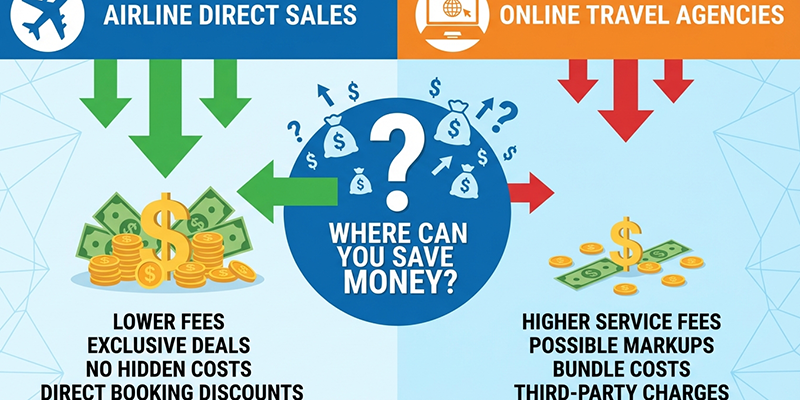
3. Consolidator and Net Fares
Large OTAs act like wholesalers. They negotiate private net fares with airlines and then decide how much margin to add on top. In some cases, they’ll even sell flights at razor-thin margins—or a loss—to hit volume targets or push higher-margin hotel and car rental bundles later.
That’s why big names like Expedia, Booking.com, or Trip.com can occasionally beat the airline itself, especially on long-haul U.S. routes.
4. Forced Connections Airlines Won’t Sell
Airlines generally sell flights within their own alliance systems. OTAs don’t care. They can “force” an itinerary between two airlines that have no partnership at all. It’s cheaper, but you’re essentially buying two separate tickets stitched together.
When it works, it feels genius. For example, a New York to Paris route might stitch Delta with a low-cost European carrier, dropping the total cost by $50–$100 compared to booking each leg separately.
When it doesn’t, no one owes you anything—miss a connection, and you may end up buying another ticket yourself.
The Hidden Cost: The Finger-Pointing Loop
This is where cheap tickets turn expensive.
When you book through an OTA, the airline doesn’t fully control your ticket. Until you check in, the OTA is the legal owner of the booking record.
That leads to the most infamous OTA failure mode: the Finger-Pointing Loop.
The flight gets cancelled.
The airline says: “You booked through an agent. Call them.”
The OTA’s call centre says: “The airline changed the flight. Contact the airline.”
Meanwhile, you’re watching alternative flights disappear.
Schedule Changes Are Worse Than Cancellations
Airlines change schedules constantly. When you book direct, a two-hour shift often triggers free rebooking options.
With an OTA:
Notifications can be delayed
Changes may require approval
“Administrative fees” appear for simply accepting the airline’s own change
This is where most Reddit rage posts come from—not outright scams, but slow, rigid intermediaries. I came across a cautionary tale from a traveler who missed an entire multi-city itinerary during the Thanksgiving rush. Because both the airline and the OTA refused to take ownership of the scheduling error, they were forced to rebook a last-minute flight at double the original price.
Self-Protection Steps
Save all communications. Print or screenshot every OTA confirmation email, itinerary, and ticket number. This becomes evidence if the OTA delays resolution.
Use the airline app immediately. Input your PNR or 13-digit e-ticket number into “Manage My Booking.” If you can access your reservation there, you have leverage. Take screenshots showing the ticket exists in the airline system—these can be sent to the OTA for faster escalation.
Escalate wisely. If the OTA isn’t responding, leverage your credit card’s travel protection policy (many cards allow dispute claims for services not rendered) and file formal complaints via DOT (for U.S. flights).
Act fast during schedule changes. Don’t wait for OTA emails—log into the airline app daily for updates, especially if flying during high-traffic periods.
These steps won’t prevent every headache, but they turn a “finger-pointing” disaster into a manageable situation.
Booking Direct: When It Quietly Wins
Booking directly with an airline isn’t always cheaper, but it’s often cleaner.
What you gain:
Immediate access to customer service: rebooking or cancellations usually handled same-day.
Faster rebooking during disruptions: especially valuable during holidays or storms.
Loyalty points and upgrades. For example, booking early with Delta or United can earn points and even allow paid upgrades to premium economy or business with miles.
App-only deals: airlines often push last-minute discounts that can beat OTA pricing by $30–$60 on U.S. domestic flights.
Fewer hidden fees: baggage, seat selection, or change fees are often clearer and sometimes waived for loyalty members.
Example: A Los Angeles → New York flight might cost $320 directly, while an OTA lists it at $310 but charges $35 for a checked bag, bringing total cost above the direct booking price. Early-bird or app-only deals sometimes bring the total below $300, which OTAs can’t match.
The downside: You’re limited to that airline’s network and miss some creative routing bargains—but the peace of mind and predictable service often outweigh the marginal cost difference.
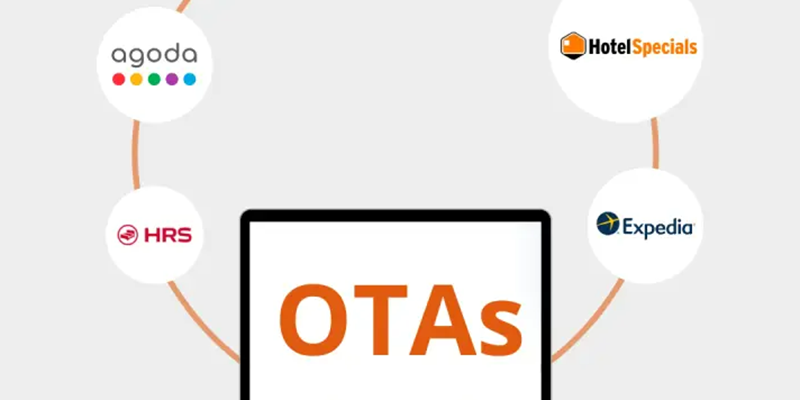
When OTAs Actually Make Sense
OTAs shine in a few specific situations:
Big Price Gaps
If an OTA is $150–$400 cheaper, especially on long-haul routes, that difference can justify the risk—if you choose a reputable platform.
Complex, Multi-Airline Routes
OTAs can stitch together budget carriers and legacy airlines in ways airlines won’t. For flexible travellers, this can unlock massive savings.
Bundled Deals
Flight + hotel packages often hide real discounts. OTAs can afford to discount one component heavily when another carries margin.
Last-Minute Inventory Dumps
When airlines panic about empty seats, OTAs sometimes get flash access to unsold inventory.
Tips for Safe Use
Stick to Tier 1 OTAs: Expedia, Booking.com, Trip.com. Avoid small, obscure sites that lack reliable support.
Price monitoring and calendar views: OTAs often let you set alerts or see a month-long calendar to spot cheaper flights.
Combine with insurance: for self-transfer itineraries or last-minute deals, pair bookings with travel insurance or credit card protections to cover missed connections or cancellations.
Examples
Bundled deals: Flight + hotel for Miami → Cancun can show a direct sum of $800. The same bundle via Expedia or Booking.com might total $620, saving nearly $180.
Complex multi-airline routing: Chicago → Paris → Rome via OTA could save $200–$400 compared to booking each leg individually on different airlines.
Last-minute inventory: When airlines need to fill empty seats a few days before departure, OTAs sometimes flash-sale them at $50–$100 off direct pricing.
The key is knowing when the savings are worth the risk—and how to use these tools strategically rather than blindly chasing the lowest number.
Where Should You Actually Book
Here’s the mental checklist that usually works:

If You Use an OTA, Do This Immediately
Think of this as damage control.
1. The 13-Digit Rule
A six-letter PNR is not a ticket. You need a 13-digit e-ticket number (starting with the airline’s code, like 001 for American Airlines).
No ticket number = no flight.
2. Verify in the Airline App
Take that code straight to the airline’s official app or website.If you can’t manage the booking there, the OTA hasn’t finalised payment.
3. Watch for “Self-Transfer” Language
“Self-transfer” means separate tickets. Miss the first flight, lose the second—no refunds.
Only do this with:
Long layovers (4+ hours)
Travel insurance
A calm personality
What I’ve Learned About Booking
The cheapest booking method isn’t always the best—but neither is blind loyalty to booking direct.
OTAs aren’t magic. They’re exploiting pricing structures airlines themselves created. Airlines aren’t saints. They just offer better control when things break.
For flexible travellers on a tight budget, OTAs can absolutely be worth it. For weddings, job interviews, or once-in-a-lifetime trips, paying the “Direct Tax” is often the cheapest insurance you’ll ever buy.
The trick isn’t picking sides. It’s knowing when the savings are real—and when they’re bait.
Latest News

How to Experience a Traditional Ryokan Stay in Japan on a Budget
March 3, 2026
10 Travel Hacks for Long Flights You’ll Wish You Knew Sooner
February 16, 2026
The Cheapest Vacation Destinations in the World That Don't Feel Cheap
February 12, 2026

10 of the World’s Best Caves You Can Explore Safely
September 27, 2025

Most Beautiful Hiking Trails in the US for Nature Lovers(Even For Beginners)
September 2, 2025

Secret Camping Spots That Feel Like Paradise (and How to Find Them Before Everyone Else Does)
August 16, 2025